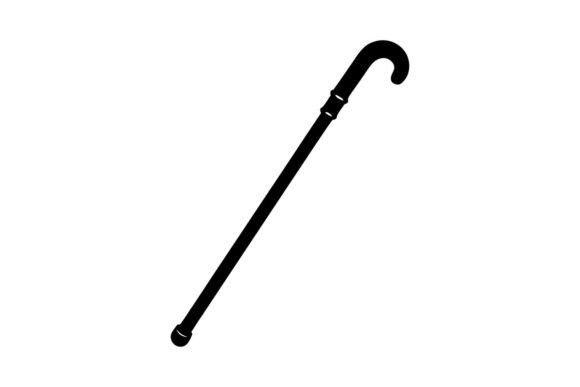
Cane Walking Stick Vector Icon Review
As a designer who has stitched thousands of files and reviewed countless graphics for my own shop, I know that the difference between a good embroidery project and a great one often comes down to the source file. Today, I am looking at the Cane Walking Stick Vector Icon, a piece categorized under Illustrations and Graphics that promises to represent mobility support and accessibility. Before you download this to use on your next custom apparel or handmade product, let's walk through how this design actually behaves in the hoop.
First Impressions: Mood and Visual Personality
The moment you open the file for the Cane Walking Stick Vector Icon, the first thing you notice is its clean, uncluttered silhouette. In the world of embroidery, less is almost always more, especially when dealing with symbols meant to convey meaning quickly. This design feels respectful and dignified. It does not try to be flashy; instead, it relies on a strong, recognizable shape that immediately signals assistance and independence. For a designer creating a boutique product or a heartfelt gift, that mood is exactly what you want. It avoids the clinical look of a medical diagram and leans into the warmth of a supportive symbol.
The layout is straightforward, which is a huge plus for machine embroidery. There are no chaotic lines or tiny, intricate flourishes that might get lost in the stitching process. The visual personality is modern yet timeless, making it versatile enough to fit on a vintage-style apron or a contemporary tote bag without looking out of place. When you hold up a mockup of this design, it projects professionalism and clarity, two traits that are essential for building trust with customers browsing an Etsy listing or walking through a craft fair booth.
Real-World Application: From Digital File to Finished Product
I recently had a scenario where a client needed a special item for a senior living facility gift exchange. They wanted something subtle but meaningful to embroider on kitchen towels and pillow covers. The Cane Walking Stick Vector Icon was the perfect candidate. I imagined the final result: a simple, elegant cane stitched in a soft charcoal thread against a cream-colored tea towel. The design would serve as a gentle reminder of dignity and care, rather than a stark medical warning.
This same icon works beautifully for custom apparel, particularly sweatshirts and t-shirts designed for awareness campaigns or community groups. On a cap, the curve of the cane can follow the natural arc of the fabric, adding a stylish touch to a promotional hat for a local charity run. For small business owners selling digital products, this graphic serves as an excellent asset for printable mockups, allowing you to showcase how a finished embroidered patch or badge would look on various garments before a single stitch is made.
When used on baby items, the design takes on a softer tone. While a cane might seem serious, in the context of a family heirloom or a "grandma's helper" shirt, it becomes a charming nod to heritage. The simplicity of the Cane Walking Stick Vector Icon ensures that even on delicate fabrics like cotton muslin for a onesie, the design remains legible and cute rather than overwhelming.
Where Caution is Required
However, not every canvas is a good home for this design. As an experienced reviewer, I have to point out where this embroidery file might struggle. If you are working with a very small hoop size, such as those used for cufflinks or tiny keychains, the details of the cane handle might merge together. The curves need enough space to breathe so that the satin stitch doesn't pucker or lose definition.
Fabric texture plays a massive role here. On highly textured materials like bouclé wool or thick fleece, the fine lines of the vector icon might get swallowed by the nap of the fabric. Similarly, if you attempt to stitch this on stretchy knit fabrics without proper stabilizer, the tension could distort the straight lines of the cane shaft. Dark fabrics present another challenge; while high contrast is usually good, ensure your chosen thread colors pop sufficiently against deep navy or black backgrounds. If the contrast is too low, the symbolism gets lost, and the customer won't recognize the intent of the Cane Walking Stick Vector Icon.
Curved surfaces like baseball caps require careful digitizing. If the original file isn't optimized for curved stitching, the top of the cane might look stretched or compressed when applied to the crown of a hat. Always test these placements on scrap pieces of the actual garment material before committing to the final product.
Impact on Value and Brand Consistency
In the commercial embroidery market, visual appeal directly translates to perceived value. A crisp, well-executed Cane Walking Stick Vector Icon elevates a basic tote bag into a premium accessory. Customers associate clear, professional stitching with quality craftsmanship. When a buyer sees a sharp, clean symbol on a finished product, they assume the rest of the item is equally well-made. This builds brand consistency, especially for designers who specialize in accessibility themes or senior care products.
For Etsy sellers and crafters, this design enhances giftability. People love buying personalized gifts that carry a message of support. The ability to turn a simple vector graphic into a tangible, embroidered object adds a layer of emotional connection that printed designs simply cannot match. However, if the stitching is messy or the density is off, that emotional connection breaks, and the product feels cheap. The success of the Cane Walking Stick Vector Icon in a commercial setting depends entirely on the execution of the stitch density and the choice of thread colors.
Practical Designer Notes for Your Next Project
Before you hit the start button on your machine, there are several technical steps you must take to ensure the Cane Walking Stick Vector Icon performs flawlessly. First and foremost, always test the design on scrap fabric. This is non-negotiable. You need to see how the fill stitch interacts with your specific fabric grain and how the running stitch holds up after washing.
Check your thread color contrast carefully. Sometimes a vector looks great on a screen but fails in person due to lighting conditions. Try converting your mockup to black and white to verify that the shapes remain distinct without the aid of color. Confirm your hoop size matches the dimensions of the design; forcing a large icon into a small hoop will result in misalignment and wasted time.
Don't forget the stabilizer. For a design like this, which likely uses a mix of satin stitches for the outline and fill stitches for the body, you need a stable base. Use a cut-away stabilizer for durability, especially on items that will be washed frequently, like aprons or tote bags. Inspect the small details of the cane handle closely; if they are too thin, consider adjusting the stitch density in your software to prevent breakage during production.
Finally, review the licensing terms. If you plan to sell finished products featuring the Cane Walking Stick Vector Icon or distribute the digital embroidery file itself, you must confirm that your license allows for commercial use. Many graphics intended for personal projects do not permit resale. By taking these practical steps, you ensure that your embroidery project is not just a nice idea, but a profitable, high-quality finished product ready for your customers.