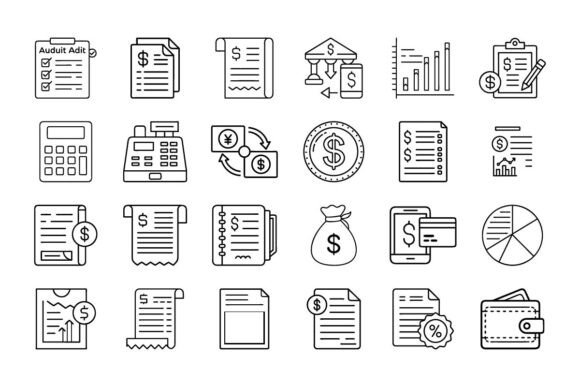
Modern Accounting Vector Icons
I have reviewed thousands of digital assets, but there is always a specific moment when I pause before clicking "send to machine." It happens when I am considering a design that needs to bridge the gap between professional branding and handmade charm. Today, I am evaluating Modern Accounting Vector Icons, a set described as thin-line style graphics for finance and business. As someone who has spent years turning digital files into tangible products for Etsy shops and boutique clients, my first question is simple: does this translate well from a screen to a needle?
The immediate impression of these icons is one of sleek minimalism. In the world of embroidery, where thread thickness and stitch density can easily muddy fine details, a clean thin-line aesthetic is both a gift and a challenge. These symbols for tax, budgeting, and auditing possess a modern visual personality that feels crisp and organized. They do not scream for attention with heavy fills; instead, they whisper professionalism. This makes them an ideal candidate for projects where subtlety is key, such as corporate gifts, office accessories, or high-end boutique branding.
Imagine a scenario where a client approaches me to create a custom line of embroidered tote bags for a local financial planning firm. They want something that says "accounting" without looking like a generic clip-art collection. This is where Modern Accounting Vector Icons shines. The thin lines allow us to use satin stitches to create elegant outlines that mimic the precision of a spreadsheet. When stitched onto a sturdy canvas tote, the result is a sophisticated accessory that a professional would actually be proud to carry. It elevates the product from a simple craft item to a branded asset.
Real-World Application in Stitch
When I move from the screen to the hoop, the performance of these designs depends heavily on the project type. For custom apparel like sweatshirts or t-shirts, the thin-line style works beautifully if we select the right thread colors. A dark navy suit jacket embroidered with white or silver thread using these icons creates a sharp, executive look. However, on a light-colored hoodie, we might need to adjust the thread weight or add a subtle underlay to ensure the lines don't disappear into the fabric texture.
I also see strong potential for baby embroidery and nursery decor. While accounting seems serious, these icons can be reimagined for future-focused gifts. Imagine a small, delicate outline of a piggy bank or a graph icon stitched onto a baby blanket or a onesie for a child whose parents work in finance. It becomes a personalized gift that tells a story about family values. The simplicity of the design ensures it remains legible even on small surfaces like a diaper bag or a bib.
For craft business owners and Etsy sellers, this design offers versatility. You could create a series of kitchen towels featuring icons for "budget," "tax," and "savings" for holiday gifts. The humor in applying serious financial symbols to kitchenware often resonates well with buyers. Similarly, for embroidered patches, the clean lines are perfect for iron-on applications on denim jackets or caps. The lack of excessive fill stitch means the patch will lie flat and remain durable through frequent washing.
Where Caution Is Required
Despite its elegance, Modern Accounting Vector Icons is not a universal solution. There are specific scenarios where this design requires careful consideration. If you are working with a very small hoop size, the thin lines might become too fragile to stitch reliably. On textured fabrics like bouclé or thick fleece, the definition of the lines can get lost. The thread may struggle to hold the shape against a rough surface, resulting in a blurry image that lacks the intended professional polish.
Stretchy fabrics present another hurdle. Thin-line designs rely on stability to maintain their geometric integrity. If you attempt to stitch these on a stretchy jersey knit without proper stabilizer, the design may pucker or distort, ruining the clean look of the accounting symbols. Similarly, on curved surfaces like baseball caps, the distortion of the curve can alter the angles of the icons, making a straight line look crooked. For these applications, testing on scrap fabric is non-negotiable.
Dense stitch areas are also a concern. While these icons are primarily outlines, if you try to over-fill them to make them pop, you risk losing the "thin-line" character entirely. The beauty of the design lies in its negative space. If you crowd the stitching, the design becomes heavy and loses its modern appeal. Additionally, for products that require frequent industrial washing, ensure the thread choice is high-quality polyester to prevent fraying at the edges of the thin lines.
Visual Impact and Customer Trust
In the competitive landscape of handmade goods, presentation matters. Using a cohesive set of design assets like these icons helps establish brand consistency. When a customer sees a uniform style across a tote bag, a pillow cover, and a kitchen towel, it signals professionalism and attention to detail. This visual clarity builds trust. A buyer is more likely to purchase a finished product if the embroidery looks intentional and precise rather than haphazard.
The finished product value increases when the design matches the theme perfectly. For a boutique selling business-themed gifts, these icons are a natural fit. They convey a message of order and success. When used in commercial embroidery projects, such as uniforms for accounting firms or promotional items for tax season, the design adds a layer of sophistication that generic logos cannot achieve. It engages the buyer by speaking directly to their identity as a professional or an entrepreneur.
Practical Designer Notes
Before you commit to a production run, I strongly advise running a few tests. First, check the stitch density. Since these are thin lines, you may need to adjust the tension slightly to ensure the satin stitches lay flat without gaps. Second, review the thread color contrast. High contrast is essential for thin-line designs to remain visible. Black thread on white fabric is classic, but consider gold or metallic threads for a premium feel on dark backgrounds.
Always inspect the small details in your digitizing software or mockup tool. Look closely at the corners of the icons to ensure they are defined enough to stitch. If the original file is a vector graphic, verify how it converts to a machine embroidery design. Sometimes, complex curves in vector art can become jagged when converted to stitches. Test the design in black and white mockups to see how it reads without the distraction of color.
Don't forget the hardware. Ensure your hoop size accommodates the design without cutting off any elements. Use the appropriate stabilizer for your fabric type; cut-away stabilizers are often best for maintaining the structure of thin lines on stretchy materials. Finally, confirm whether the license allows for commercial use if you plan to sell the finished items. Many digital embroidery files come with restrictions that must be respected.
In conclusion, Modern Accounting Vector Icons is a versatile and stylish addition to any designer's library. It brings a sense of order and modernity to embroidery projects that range from personal gifts to commercial merchandise. By understanding its strengths and limitations, you can transform these simple graphics into high-value handmade products that delight customers and elevate your brand.